

Overview
Ditto Run is a fast-paced 2D sidescrolling platformer built around transformation & experimentation. The player controls Ditto, a short amorphous blob, as it morphs through themed levels, overcoming obstacles, defeating enemies, and surviving increasingly dangerous environments.
The game's main appeal is discovery: every new area introduces things to transform into, and every transformation changes how Ditto moves, fights, and interacts with the world.
The journey takes Ditto from pleasant plains → icy mountains → dense forest → active volcano → dragon nest, before a portal drops the player into a corrupted dark forest for the final boss.
Background Story
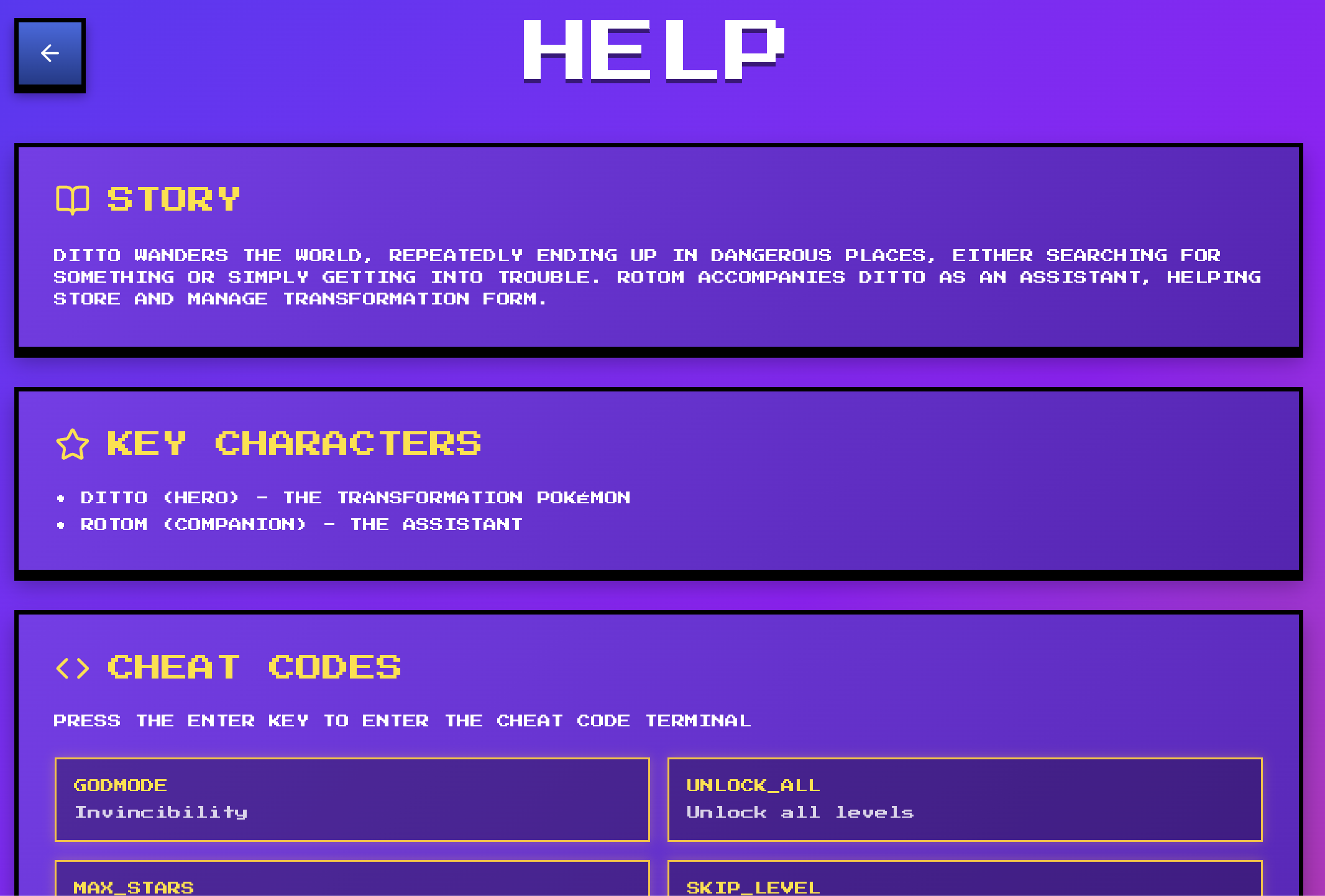
Ditto wanders the world, repeatedly ending up in dangerous places, either searching for something or simply getting into trouble. Rotom accompanies Ditto as an assistant, helping store and manage transformation forms.
As the journey continues, environments become stranger and more dangerous. The final area is a corrupted, unstable, ominous section of the dark forest which serves as the climactic stage. The tone shifts from adventurous to surreal and unsettling by the end.
Core Loop
The central gameplay loop, step by step:
Transformation Energy System
Ditto has a finite Energy Bar that governs how long it can hold a Pokémon form. More powerful forms drain energy faster. Weaker forms are cheaper and last longer. The bar recharges over time, and berries hidden in levels restore it quickly.
Environmental tile transformations cost far less energy. They're utility-based and should feel accessible. Pokémon forms are the big spenders, and knowing when to use them is a core strategic decision.
Players cancel transforms manually or get auto-reverted when energy hits zero. The cost scales with the Pokémon's power level.
Combat
Combat is tied directly to transformation, not a separate system. The best way to defeat an enemy is often to become something that counters it. Approaches include:
Each level ends with a miniboss that tests the mechanics introduced in that area.
World Map
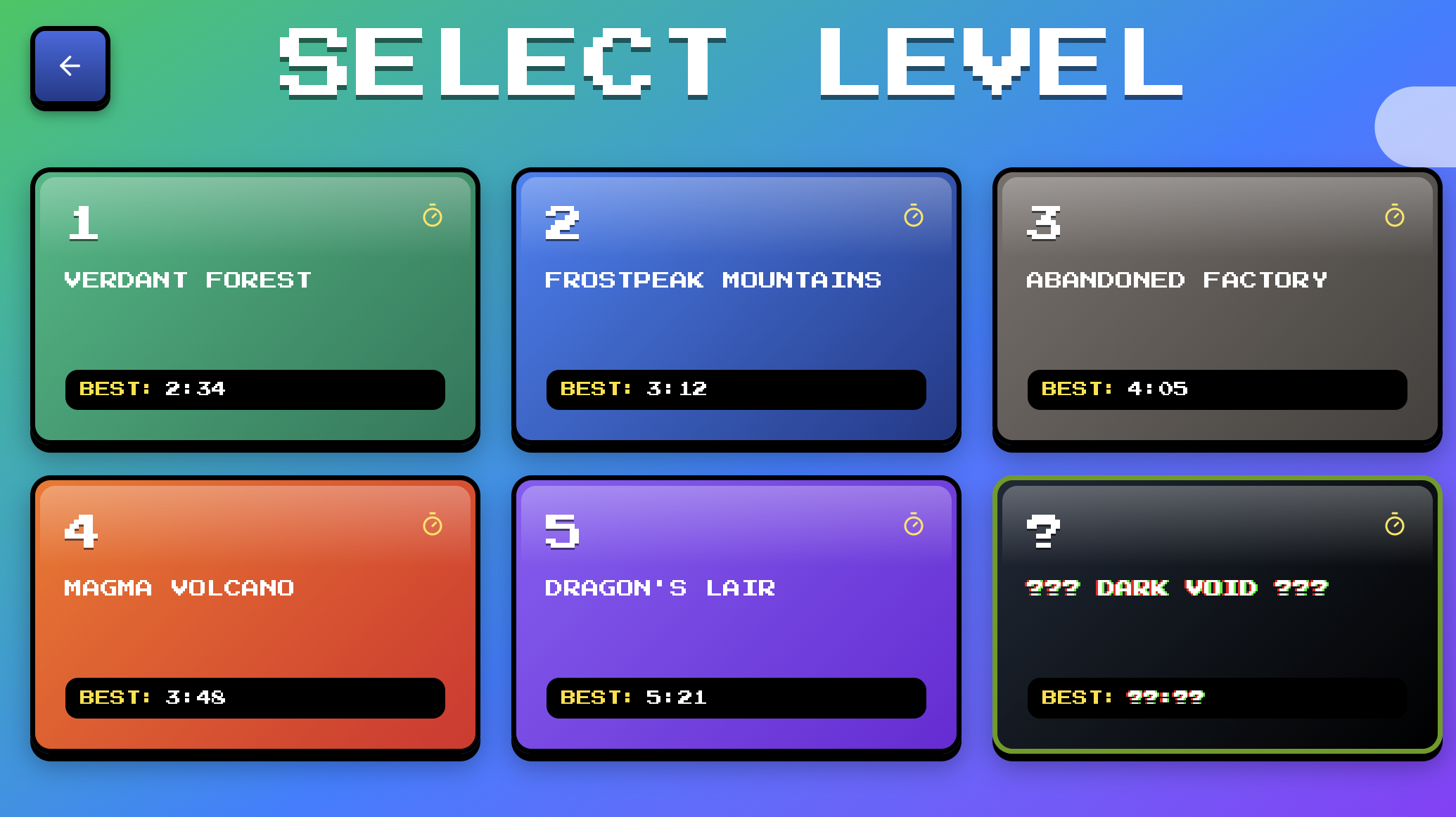
01 · FOREST
Organic, exploratory layout. Natural hazards, wide terrain variety.
02 · ICY MOUNTAINS
Slippery surfaces, frozen terrain, and precise platforming under cold conditions.
03 · DESERTED FACTORY
Sand, metal, darkness, confusing mazes. Active machines, and steel-type pokemon hunt you down.
04 · ACTIVE VOLCANO
Heat, lava, strict timing, and survival under constant pressure.
05 · DRAGON NEST
Powerful enemies, vertical challenges, intense pacing. A portal awaits at the end.
?? · HIDDEN DARK FOREST
Corrupted and unstable. Accessed only via the Dragon Nest portal. Final boss arena.
Cast
Player character. Playful, curious, adaptable. Transforms into anything it encounters.
Companion character. Stores morph forms and helps manage transformation options.
Hostile enemies. Fainted forms become storable for future transformation.
Final boss (subject to change). Warps reality, distorts the battlefield, breaks the rules.
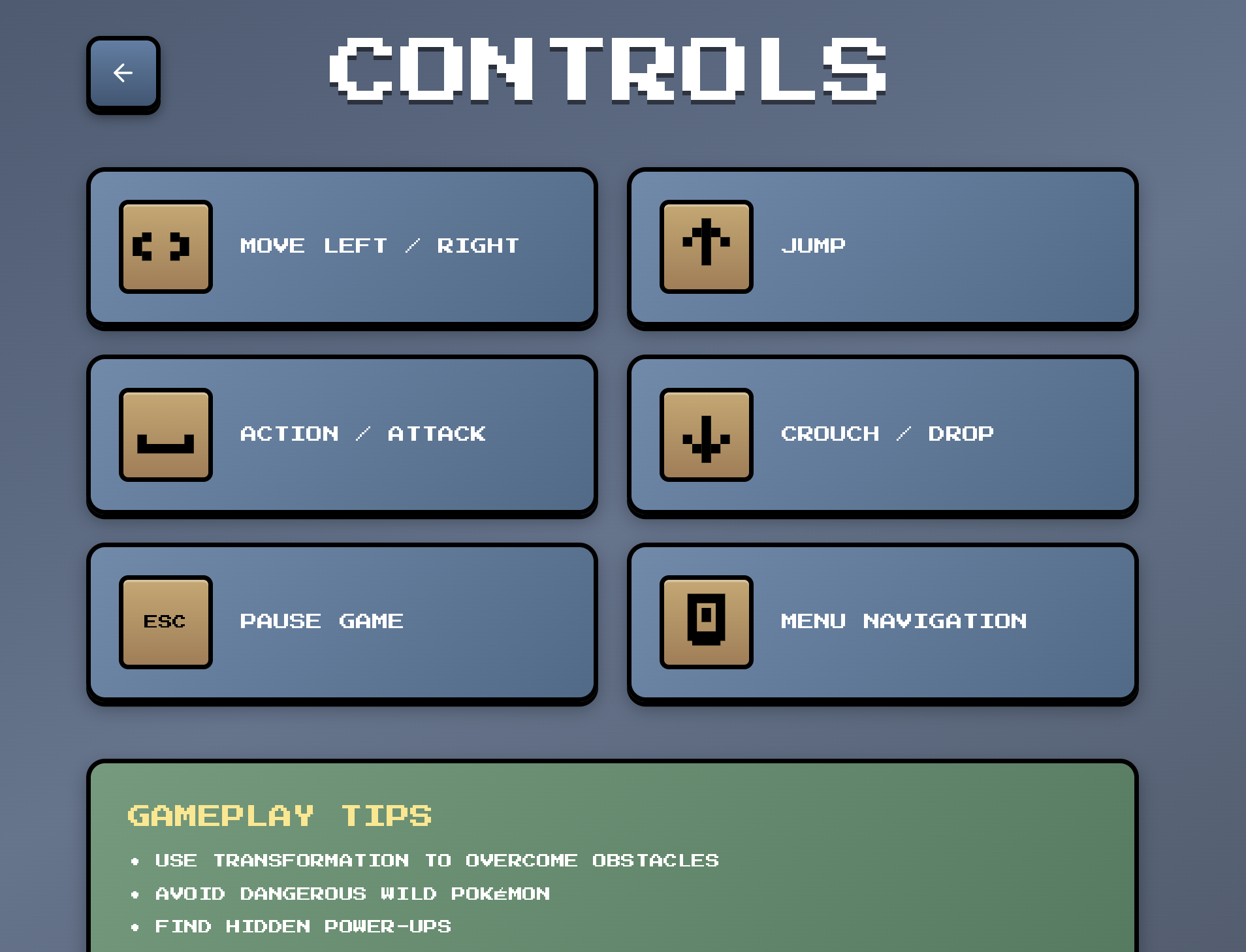
Keyboard Layout
No mouse input. Keyboard-only for fast, reactive play.
Darkrai's Corruption
The final boss fight should feel unlike the rest of the game. Darkrai warps the environment rather than simply standing in it. The battlefield feels unstable, glitching, alive.
Each attack has a clear purpose: deal damage, disrupt movement, or reshape the space. The key design goal is disorientation without confusion, every mechanic must remain learnable.
◈ "Ditto is fighting something that does not obey ordinary rules."
Interface Screens
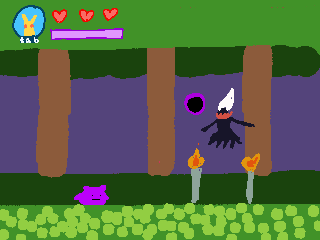
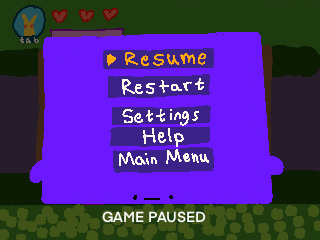
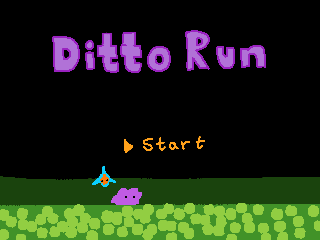
UI is intentionally minimal. Key HUD elements: current form, available transformations, energy bar, and health.
Sound & Music
Sound effects reinforce movement and transformation, the player should hear when a morph activates, when energy depletes, and when attacks land. Enemy attacks are also telegraphed with audio cues.
Music shifts in tone as the world progresses: light-hearted and optimistic in early areas, growing intense and threatening in later stages. The final boss theme is unstable and ominous, with distortion effects that mirror the glitch mechanics of the fight.
Visual Style
Colorful, readable, expressive and each level has a distinct identity: